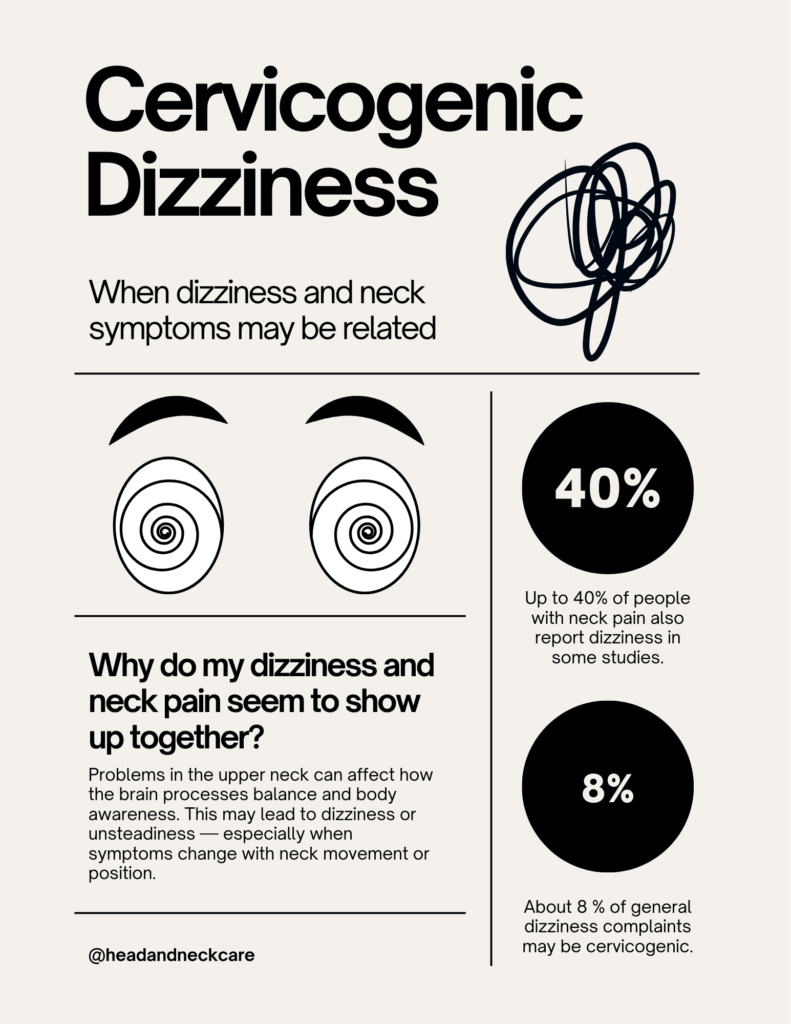
Dizziness and neck pain frequently show up together, even when MRI or CT scans look completely normal. This combination can be confusing and frustrating—especially when you’re told “everything looks fine,” yet the symptoms continue.
In clinical practice, this overlap is more common than most people realize. The reason has less to do with damage seen on imaging and more to do with how the neck contributes to balance, posture, and spatial awareness.
The Neck’s Role in Balance and Dizziness
Most people think balance comes only from the inner ear. In reality, balance depends on three systems working together:
- The inner ear
- The eyes
- The neck
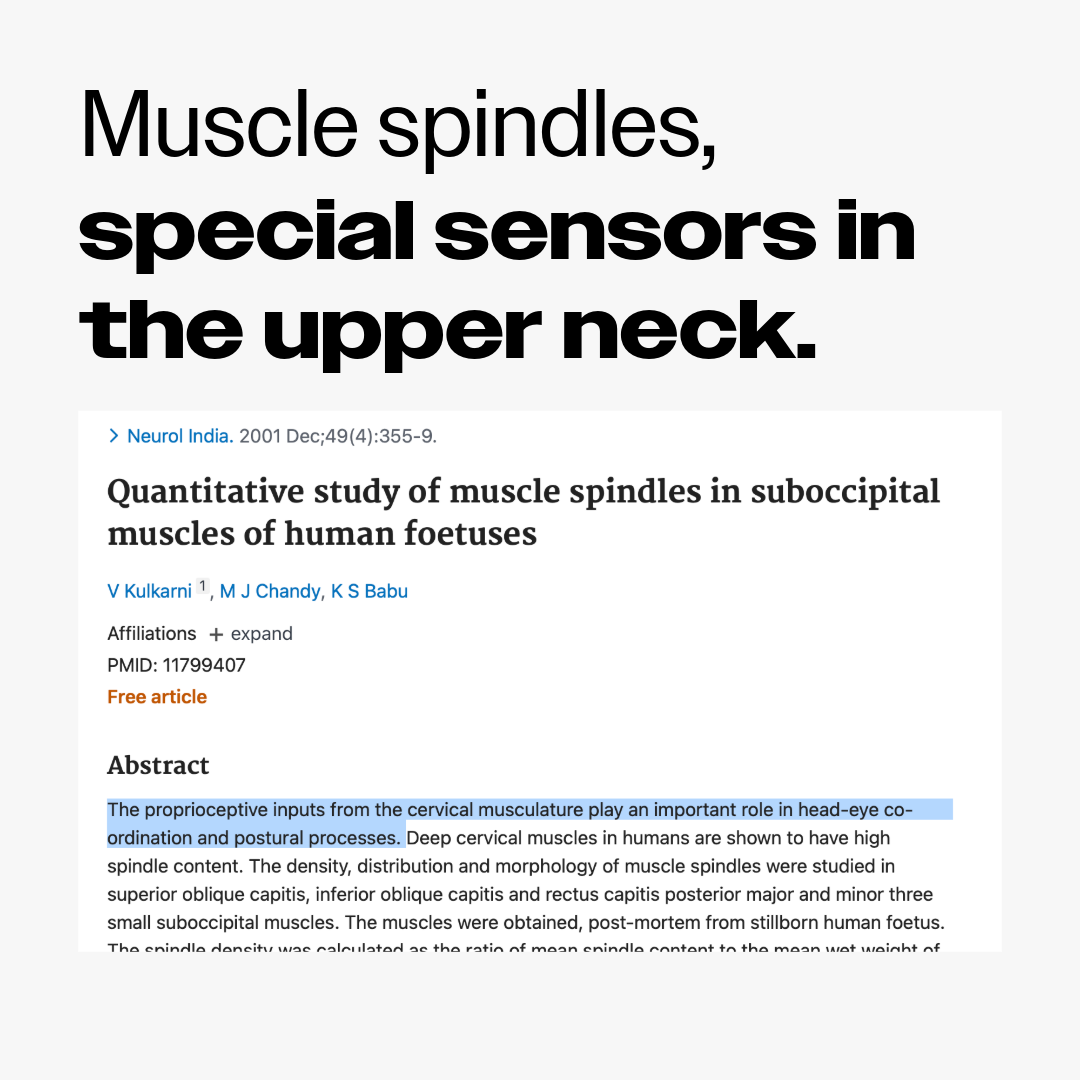
The upper neck contains specialized sensors in the joints and muscles that constantly send information to the brain about head position and movement. This input helps the brain determine where the body is in space.
When the sensory information from the neck doesn’t integrate smoothly with signals from the eyes and inner ear, the brain may struggle to orient itself. For some people, this mismatch can lead to symptoms such as:
- Lightheadedness
- Unsteadiness
- A “floating” or off-balance feeling
- Dizziness that changes with head or neck movement
When dizziness appears closely linked with neck discomfort, stiffness, or restricted motion, it is often referred to as cervical dizziness (also called cervicogenic dizziness).
Why Imaging Is Often Normal
One of the most discouraging experiences for patients with dizziness and neck pain is being told their MRI or CT scan is “normal.”
This is an important distinction:
Normal imaging does not mean symptoms aren’t real.
Imaging studies are excellent for identifying fractures, tumors, disc herniations, or serious neurological conditions. However, they often do not capture:
- Subtle joint alignment issues
- Movement-related dysfunction
- Postural strain
- Sensory integration problems
Many causes of cervical dizziness are functional, not structural. That means the problem lies in how the neck is moving and communicating with the nervous system—not necessarily in something that appears damaged on a scan.
Common Situations Where Neck Pain and Dizziness Overlap
Neck-related dizziness often shows up after events or habits that stress the head and neck, including:
- Car accidents or whiplash injuries
- Concussions or minor head trauma
- Prolonged desk or screen work
- Long-standing poor or changing posture
- Sudden or repetitive head movements
In some cases, dizziness appears first. People may begin limiting head movement to avoid symptoms, which can gradually lead to neck stiffness, muscle tension, and pain—creating a cycle that’s difficult to break.
Why Treating Only One Symptom Often Falls Short
When dizziness and neck pain occur together, focusing on just one symptom may leave part of the problem unaddressed.
- Treating dizziness alone may overlook how the neck contributes to balance
- Treating neck pain alone may miss how sensory input affects orientation
Fragmented care can lead to partial or temporary relief. For some individuals, evaluating how the head, neck, posture, and balance systems interact provides missing context—especially when symptoms persist despite other approaches.
When an Upper Cervical Spine Evaluation May Be Worth Considering
A more targeted evaluation may be helpful if:
- Dizziness and neck pain occur together
- Symptoms change with head or neck movement
- You’ve tried other treatments with limited results
- Imaging is normal, but symptoms continue
A careful assessment can help determine whether head and neck alignment, posture, or movement patterns are playing a meaningful role in your dizziness.
Why Upper Cervical Care Is Fundamental in Some Cases of Dizziness
When dizziness appears to be related to the neck, the upper cervical spine deserves careful attention.
The upper cervical region—where the head meets the neck—has a unique influence on posture, balance, and how sensory information is processed by the nervous system. Even small disruptions in this area can affect how the brain integrates input from the neck with signals from the eyes and inner ear.
NUCCA care focuses specifically on this upper cervical relationship. Rather than treating dizziness as an isolated symptom, the approach emphasizes:
-
Precise assessment of head and neck alignment
-
Gentle, low-force corrections without twisting or cracking
-
Ongoing evaluation to ensure stability over time
For individuals with cervicogenic dizziness, especially when symptoms change with neck position or movement, this level of precision matters. The goal is not to “treat dizziness directly,” but to address whether altered upper neck mechanics may be contributing to faulty sensory input.
It’s important to note that not all dizziness is cervical in origin, and upper cervical care is not appropriate for every case. However, when dizziness persists despite normal imaging or other treatments, evaluating the upper cervical spine may provide clarity that has been missing.
A focused, conservative approach helps determine whether restoring proper head–neck alignment can support better balance and symptom resolution.